Categories
Uncategorized

Navigating Sensitivity under Dictatorship

With all our guest speakers, one undeniable fact arose, that the single most important thing to do in any country you are working in is to connect with local people and try to understand local customs. Learning the language, creating ties and working within the cultural context all build up trust between communities and the these workers/researchers, critical especially those working in authoritarian nations. This week, Christin Lüttich of Adopt a Revolution spoke to us about working in Syria both before and during the civil war. While she highlighted the struggles of working in the nation under the dictatorship because of censorship and heavy security, she mentioned certain ways of still managing to work in the country. As has been an ongoing trend in the class, personal connections were stressed as a key to ensuring that you are able to work in a nation. She also further stressed the importance of giving the people their own voice rather than just speaking on their behalf. She spoke about the various people involved in many of the movements, including women and youth, who do not necessarily get a voice in the international media, showing that they are equally important and to work in the nation you must understand all these people.

This is equally important in the context of Rwanda. As I have previously mentioned, Rwanda is an extremely closed society. The Government has a large amount of control over media and the people and cracks down hard on dissent. For anyone to work in the context, it is important to work locally, figure out what is happening in communities, see the potential local movements and understand their needs. Also to ensure that the people they work with can be protected, as people will not be willing to help if they believe that a) they don’t have control over their own narrative and b) they know they could be killed or disappeared for dissenting. Without careful consideration of all the actors involved as well as knowledge of norms in Rwanda, no one will be able to make headway in a nation that is so controlled by the government. However, I will say that I think that regardless work could be difficult in Rwanda because it is a small nation, and it does not seem that much gets through without the recognition of the President. Though of course speaking to locals would be important, I think in the case of Rwanda it is probably equally important to work with the government itself, if only to protect development workers and others on projects.

Works Cited:

HRW appeals for action as Rwanda cracks down on dissent | Africa Times. (2017, September 29). https://africatimes.com/2017/09/29/hrw-appeals-for-action-as-rwanda-cracks-down-on-dissent/

Categories
Uncategorized

Lessons Learned: Rwanda

Above is a downloadable quick presentation on some of the key lessons that I have taken from this project. As well as suggestions for working in Rwanda, given its unique context.

In the slides, I address some of the lessons I have learned from 12 weeks of in-depth studying of Rwanda. One of the post important is the possibly trite observation that oppressive, totalitarian governments can do good things. It is very easy to portray authoritarian governments as an evil that must be destroyed, without considering the context they are working in or in the world at large. It is undeniable that Rwanda is an authoritarian state, yet worldwide Paul Kagame is often praised by other leaders. Kagame has made efforts in the international community to portray the positive aspects of his rule, such as his fight towards gender equality and other developmental projects. It often makes him seem more likeable and kinder than would be expected and allows for many nations to overlook the other aspects. Yet this can’t be done. Nations must acknowledge that good things can be done and be willing to work on that but remaining silent on other issues within the nation.

Additionally, as we learned throughout the semester, I want to stress how important it is to understand the local context when working in development. In the case of Rwanda, especially speaking the language is key to working in the nation as without that essential skill, speaking will be limited to just the elites of the nation. While that can be useful for certain aspects of development work, it does also mean you cannot work as effectively in the long run.

Overall, over the course of this semester, my view of Rwanda has changed considerably. An interesting dichotomy, the shining example of development that also oppresses its own nations, I am walking away from this project with a greater understanding of not just this nation, but Sub-Saharan Africa.

Categories
Uncategorized

Understanding and Sensitivity in Development

In session 10, our guest speaker talked more about his personal experiences working in development in Sub-Saharan Africa. One of the major issues discussed was the idea of political sensitivity and getting things done in countries in an authoritarian context. Similar to the previous lecture earlier in the semester, this speaker stressed the need for interpersonal relationships and care for the culture of the country. One of the stories told highlighted how it is necessary for people who wish to work in different countries need to consider the context in which they are working, when he and a senior colleague, who happened to be female, needed to change their behaviour to make it clear that she was the senior colleague as before due to patriarchal systems, the opposite had been assumed. Furthermore, he stressed not just talking to the people you meet through a certain context. Especially when gathering data, as leads on projects would have a vested interest in showing themselves in the best possible light.

Happy dancers, Rwanda
Local context is important when working, especially in Sub-Saharan Africa. Happy Dancers, Rwanda by IFPRI-IMAGES is licensed under CC BY-NC-ND 2.0

The strategies shared by the speaker would also be useful in the case of Rwanda. Rwanda is home to many development projects especially in rural areas. When assessing them, it is important for researchers coming from the outside to familiarise themselves with Rwandan culture and customs and be ready to create relationships in order to speak to the widest breadth of people possible. Rwanda, despite campaigns to the contrary, still is regularly plagued with corruption and creating relationships and moving beyond the initial contacts would be incredibly important in that context. In order to get an accurate view of the struggles faced by locals, wide networks, an understanding of customs and local context and the willingness to engage with multiple people would all be critical for work in Rwanda.

Categories
Uncategorized

Foreign Aid in Rwanda

The United States Agency of International Development, or USAID as it’s more commonly known, is as the name suggests is a United States government agency devoted to international development and foreign aid (https://www.usaid.gov/who-we-are). They have branches in numerous countries around the world, including in Rwanda.

What is interesting about the work of USAID in Rwanda is that it is always working in conjunction with the Government of Rwanda and adhering to their goals. This gives a form of legitimacy to the Government of Rwanda. As I’ve shown before, a big part of the strategy of the Rwandan Government and Paul Kagame is to gain international legitimacy. The propaganda piece I showed in on of my previous blog posts had English subtitles in order to be spread to a more international audience (the vast majority of the Rwandan population does not speak any English). Not to mention the fact that it was on Twitter, which in Rwanda which has a mostly rural population suggests it was aimed at a more diverse audience. Paul Kagame has always portrayed himself as a benevolent and successful leader. He has the trappings of democracy and for years was even lauded as one of Africa’s success stories for how he helped to develop the economy. Yet, increasingly, governments have been calling him out for authoritarian actions and this is where organisations like USAID come in. They work in pretty much every region of the country, helping in a variety of areas that are important to Rwandans, including but not limited to agriculture and food security, economic growth and trade, global health and education (https://www.usaid.gov/rwanda). These policies have a double effect. One, as previously mentioned is that it enables legitimacy from the outside. USAID is a legitimate and generally trusted government agency from a major country, having htem work with the government on government policies affords the government a certain amount of legitimacy as compared to other authoritarian states. It also affords the government legitimacy within the country. These programs are dedicated to improving the lives of regular Rwandans and the more it is seen that the government is actively working to improve lives, the more support they will garner. The more legitimacy that the government earns the more likely they will be able to use authoritarian behaviour with less repercussions.

Categories
Uncategorized

Democratic Backsliding in Rwanda

Is Rwanda Becoming a Dictatorship by AlJazeera

Since 2010, Rwanda has been experiencing democratic backsliding. Though Rwanda was never a full democracy, 2010 and onwards showed a consolidation of President Kagame’s power and more blatant moves to continue his hold on power. In the above video, which is a debate on Al-Jazeera about the status of Rwanda after the 2017 election of Paul Kagame, explains the democratic backsliding leading up to and during the 2017 election in Rwanda, in which Paul Kagame won 99% of the vote.

According to the video, since 2010, President Kagame has been increasing pressure on all opposition to his rule, consolidating his power in the nation. This continued in 2015 when he held a referendum to get rid of the term limits on Rwanda’s presidency, allowing him the opportunity to keep running for president until about 2034. As explained by David Himbara in the video, this itself was a sign of democratic backsliding as it showed Kagame’s intentions to stay in power, notably to escape possible repercussions for his actions. All this lead to the 2017 election where Paul Kagame ran for a third term. Already, this election had been watched warily by outside observers as it prevented a peaceful democratic transition, a necessity in an actual democracy. It showed that Kagame was not ready to give up his power. Additionally, as shown in Al-Jazeera’s video, the election itself was plagued by irregularities as Kagame winning 99% of the vote was seen as unlikely to occur under normal circumstances. The video continues by outlining the international concerns regarding this election as an example of democratic backsliding, while also allowing a supporter of the government to speak in its defence.

RPF Presidential Campaign  2017 15Th July (Kicukiro District)
RPF Presidential Campaign 2017 15th July (Kicukiro District) by Mugisha Don de Dieu licensed under CC BY 2.0

Image showing supporters of President Paul Kagame during the most recent election in Rwanda in 2017. Plagued by accusations of vote tampering, the vote resulted in a runaway victory for the incumbent. The 2017 election is often cited as an example of democratic backsliding in the country both for election irregularities and the fact that it put Paul Kagame in power beyond term limits, preventing a possible passover, a necessity in a democracy.

This video was interesting because it was set up to be a debate. There was one anti-government speaker, David Himbara, a critic of the government, and one pro-government, Gatete Nyiringabo. However, despite ostensibly being an equal debate, the questions were posed clearly more in favour of the anti-government Himbara. This affected at least slightly the objectiveness of the piece in explaining these instances in Rwanda as the moderator/interviewer had a clear position. That being said, it was still interesting to see an example of democratic transition from both sides, especially as the pro-government speaker was not actually a part of the Rwandan government. It allowed for at least some discussion of the issue beyond the traditional Western view of democracy and backsliding. Regardless, it was clear that Rwanda has been backsliding for some time, seen by blatant election irregularities and Kagame’s attempts to maintain his power, preventing the possibility of a peaceful transition as is necessary under a true democracy.

Works Cited:

Is Rwanda becoming a dictatorship? (n.d.). Retrieved May 6, 2020, from https://www.aljazeera.com/programmes/upfront/2017/09/rwanda-dictatorship-170930085904781.html Kagame wins by landslide in Rwanda. (2017, August 5). BBC News. https://www.bbc.com/news/world-africa-40822530

Categories
Uncategorized

Policy-Making in Rwanda: the National Policy against Gender Based Violence

In authoritarian contexts, policy-making can come in many different forms. In personalist governments especially decisions can just be made with no consideration of formal institutions. However, as we have explored in the class and readings, it is possible to find authoritarian governments that at least try to portray a front of democracy, Rwanda is one of these cases.

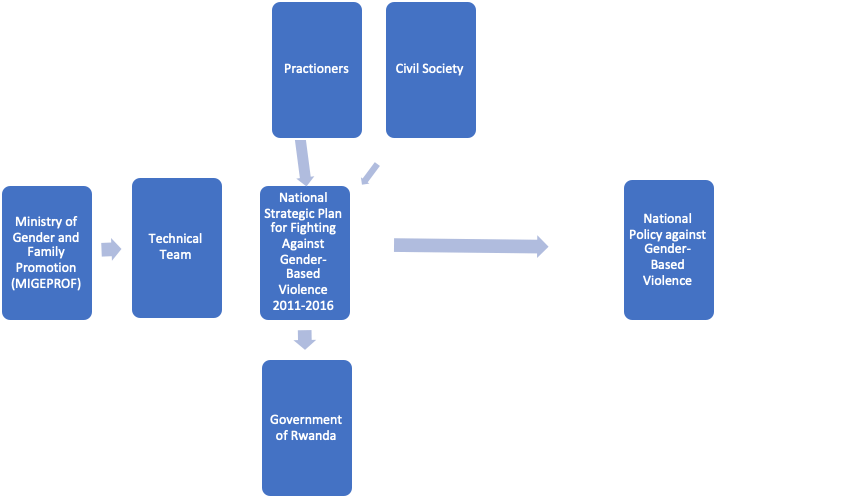
Rwanda is indubitably an authoritarian state, under the control of a single leader for the past two decades and likely to remain under his influence and that of his party for at least a decade more. As I discussed in previous blog posts, Rwanda in many ways could be considered a personalist regime, though perhaps not to the same extent as other examples, at the very least it is very clearly under single-party rule. However, it does have the trappings of democracy. That includes formal institutions through which laws must pass and the National Policy against Gender-Based Violence, illustrated above, is a prime example.

Rwanda in general has many policies relating to gender equality. The National Policy against Gender-Based Violence itself was created in 2011, part of a number of other programs, including the National Gender Policy and ongoing work to adhere to International law including the Convention on the Elimination of All Forms of Discrimination against Women and United Nations Security Counsel Resolution 1325.

Orange the World 2018 - Rwanda
Orange the World 2018 – Rwanda by UN Women, licensed under CC BY-NC-ND 2.0

Members of the Rwandan Police supporting the Orange the World Movement started by UN Women. Orange the World was a campaign against Gender-Based Violence lead by UN Women and other partners. Gender Equality campaigns are common in Rwanda and the Government has shown itself to be an ardent supporter of women’s rights.

The policy was launched by the Ministry of Gender and Family Promotion (MIGEPROF) of the Republic of Rwanda, a government institution which is charged with a number of mandates including promotion of gender equality. As can be seen in the flowchart above, the National Policy against Gender-Based Violence came from a technical team, launched by MIGEPROF. The formation of the Strategic Plan to Fight GBV was created with consultation from the Rwandan Government, Civil Society and Practitioners all of which produced the Policy.

Not only were numerous formal institutions involved in the creation of the policy, but civil society as well as other parts of the government were consulted. This shows a clear multilateral effort with multiple stakeholders, a necessity in democracy at least for this policy.

However, this is just one example and does not mean that formal institutions are always used in the country. With Gender Equality, Rwanda, and Paul Kagame especially, has portrayed itself as a major player in the international field. Often Kagame attends international events and collaborates with international partners on this particular issue. Though of course it is an admirable goal, it could maybe be said that Rwanda’s openness and transparency on these certain policies, those that they often work on with international organisations, could be a way to brush aside possible accusations of authoritarianism and oppression in the state. By showing clearly what they are working on in this one arena, they can pull focus away from arenas which might not garner as much international support. This in fact is an increasing criticism of world leaders’ interactions with Kagame, as many praise his good works but ignore the oppression in his nation.

Source: Republic of Rwanda Ministry of Gender and Family Promotion, “National Strategic Plan for Fighting Against Gender-Based Violence 2011-2016)” (2011). https://migeprof.gov.rw/fileadmin/_migrated/content_uploads/GBV_Policy_Strategic_Plan-2.pdf

Other Works Cited:

Kagame, P. (2013, July 5). Gender equality is a right, not a favor. Paul Kagame. http://paulkagame.com/?p=2594 Mpoke-Bigg, A. (2019, November 25). Global Gender Summit 2019: African leaders take on the responsibility to urgently close the gender gap [Text]. African Development Bank. https://www.afdb.org/en/news-and-events/press-releases/global-gender-summit-2019-african-leaders-take-responsibility-urgently-close-gender-gap-32858 Orange the world in 16 days. (2016, November 25). UN Women. https://www.unwomen.org/en/news/stories/2016/11/orange-the-world-2016 Sundaram, A. (2014). Rwanda: The darling tyrant. POLITICO Magazine. https://www.politico.com/magazine/story/2014/02/rwanda-paul-kagame-americas-darling-tyrant-103963.html UNECA. (2014). Republic of Rwanda: Report on the Implementation of the Beijing Declaration and Platform for Action (1995) and the Outcomes of the Twenty-Third Special Session of the General Assembly [Country Report]. https://www.uneca.org/sites/default/files/uploaded-documents/Beijing20/NationalReviews/natl_review_rwanda_-_eng.pdf

Categories
Uncategorized

Military and Personalist Rule in Rwanda

Authoritarian governments are not just limited to one-party rule. Barbara Geddes in “What Do We Know About Democratization After 20 Years,” breaks them into four categories: military, personalist, single-party, and mixtures of the other three. Since I have already explored single-party rule in Rwanda, namely the authoritarian regime in place since the end of the Rwandan Genocide, I now turn to instances of military and personalist rule in Rwanda, or the time between the mid-70s until 1994 and the start of the Genocide, though also possibly including Rwanda today.

Juvénal Habyarimana (1980).jpg
President Juvénal Habyarimana of RWANDA arrives for a visit by César
Former President Habyarimana whose Personalist Rule dominated Rwandan politics from the mid-70s until his death in 1994. His death served as a major trigger of the Rwandan Genocide.

After a military coup in 1973, lead by Juvénal Habyarimana, Rwanda stayed under military rule until 1978, when Hambyarimana became the president. In this military rule, Hambyarimana was the leader of a group of other officers who had also contributed to the coup, all part of the Hutu majority though more moderate than their predecessor government (Ibid). After Hambyarimana became president, , though there were elections, I would argue that Habyarimana’s years of rule until his assassination in 1994 would be classified as personalist rule, as determined by Geddes. In her paper, Geddes describes personalist rule as characterised by a single ruler who has access to office and its benefits (Geddes 121-122). Habyarimana created a party to serve him but he was the sole power during his entire rule. In fact, no one even ran against him in 1988. His rule dominated the nation for these two decades, as he headed the party and government. Furthermore, his assassination in 1994 triggered the Rwandan Genocide. Geddes states that personalist rules cannot survive the death of their leadership, while single party regimes can at least turn to a new leader within the party (Geddes 122). Though of course the Rwandan Genocide was ultimately due to the igniting of simmering tensions between the Tutsis and the Hutus, exacerbated by Habyarimana’s call for peace and plans to include Tutsi representation in the government, his death was the immediate trigger.

Though it is undeniable that the period between the 1973 coup and the 1994 Genocide were characterised by militarist and then personalist rule in Rwanda, there is an argument that the current authoritarian government in Rwanda could be considered personalist as well. Though elections are held and there are technically other parties, Rwanda as a state has been dominated by the ruling RPF since 1994, and by Kagame himself since 2000. Though ostensibly this is a single-party system, Kagame has had ultimate power in the country for a long period of time, something that is not likely to end anytime soon due to new laws which allow him to continue to run for president. Kagame is the leader and the sole power, clearly the definition of personalist rule. Perhaps this will change in the future and power will stay in the single party just moving to another leader or the authoritarian government will collapse, it is impossible to say, but for now it is entirely possible to consider Rwanda as a personalist regime, especially as Kagame silences all dissent even that within his own party.

Umushyikirano 2011 | 15-16 December 2011
Umushyikirano 2011 | 15-16 December 2011 by Rwanda Government, licensed under CC BY-ND 2.0
President Kagame as a parliamentary meeting in 2011

Works Cited:

Geddes, B. (1999). What do we know about democratization after twenty years? Annual Review of Political Science, 2(1), 115–144. https://doi.org/10.1146/annurev.polisci.2.1.115 History.com Editors. (2019, September 30). Rwandan genocide. HISTORY. https://www.history.com/topics/africa/rwandan-genocide Paul kagame | biography, education, & facts. (n.d.). Encyclopedia Britannica. Retrieved May 6, 2020, from https://www.britannica.com/biography/Paul-Kagame Rwanda: History | the commonwealth. (n.d.). Retrieved May 6, 2020, from https://thecommonwealth.org/our-member-countries/rwanda/history

Categories
Uncategorized

Interviewing in an Authoritarian Context

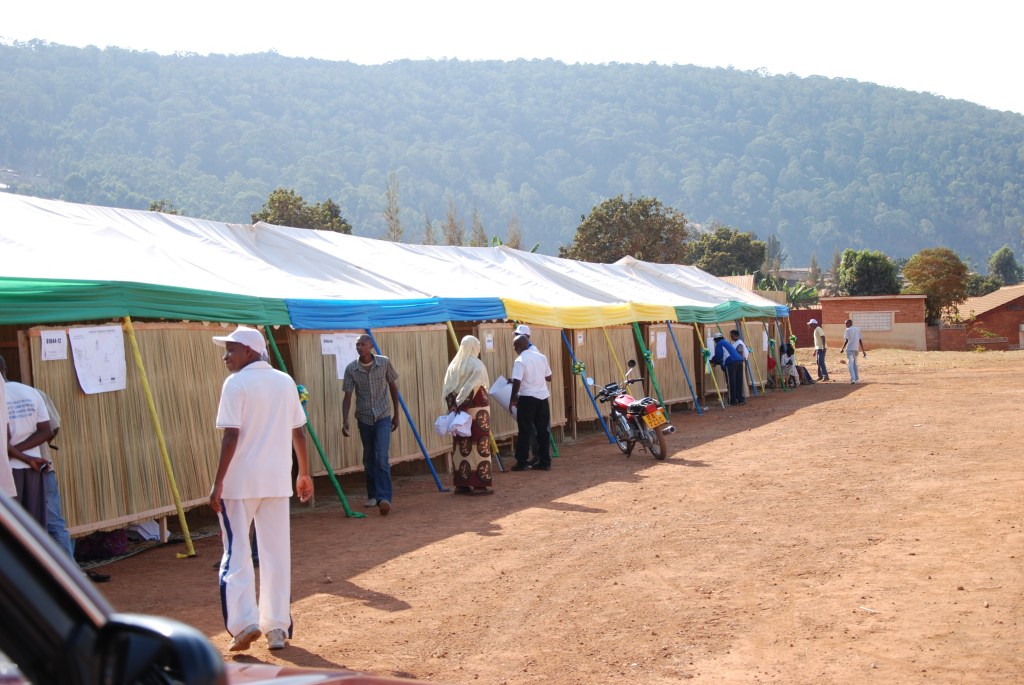
Makeshift Rwanda polling station by Commonwealth Secretariat is licensed under CC BY-NC 2.0

This week, Anna Litvinenko discussed the role of elections in authoritarian states, specifically Russia, though also the difficulties facing researchers in these countries, especially when it comes to interviewing people. A large part of her presentation involved the tactics that she personally used in interviewing, both to ensure that she was receiving comprehensive and pertinent information, but also to keep her interviewees safe in a political climate which punishes dissent. What worked most effectively for Anna was creating strong, personal networks in order to have people she trusted, who trusted her in return, who could help her find potential interview subjects. The other large part was that when she interviews a subject she would create a personal connection, meeting them multiple times. This process was necessary for two reasons. The first was that by creating this personal connection, she could better understand the threats facing her interviewees, the dangers they could attract by speaking with her in order to ensure their maximum safety possible. The second reason was that by creating an environment wherein the subjects felt they could open in dialogue with no fear, since she took their safety seriously and was engaging with them on a level beyond just a superficial, she was able to get more accurate information. The more comfortable an interviewee is, the more likely they are to give their true opinion.

A more personal approach would also be an effective tool in Rwanda. As mentioned in other blog posts, opponent leaders and their family and friends are often killed or go missing, and among human rights groups it is well-known that torture and other coercive measures are used in the nation (https://www.aljazeera.com/news/2017/10/rwanda-illegally-detaining-torturing-civilians-hrw-171010094439905.html). Civil society and all dissidents are regularly silenced and there is no space for true public discourse criticising the government (https://freedomhouse.org/country/rwanda/freedom-world/2019). It is unlikely then that most people would be willing to put themselves and their families in danger to answer a researcher’s questions. Thus, Anna’s policies of creating personal connections and networks in the country would be extremely effective in this context, since interviewers could engage with subjects, increasing their safety and gathering more accurate responses.

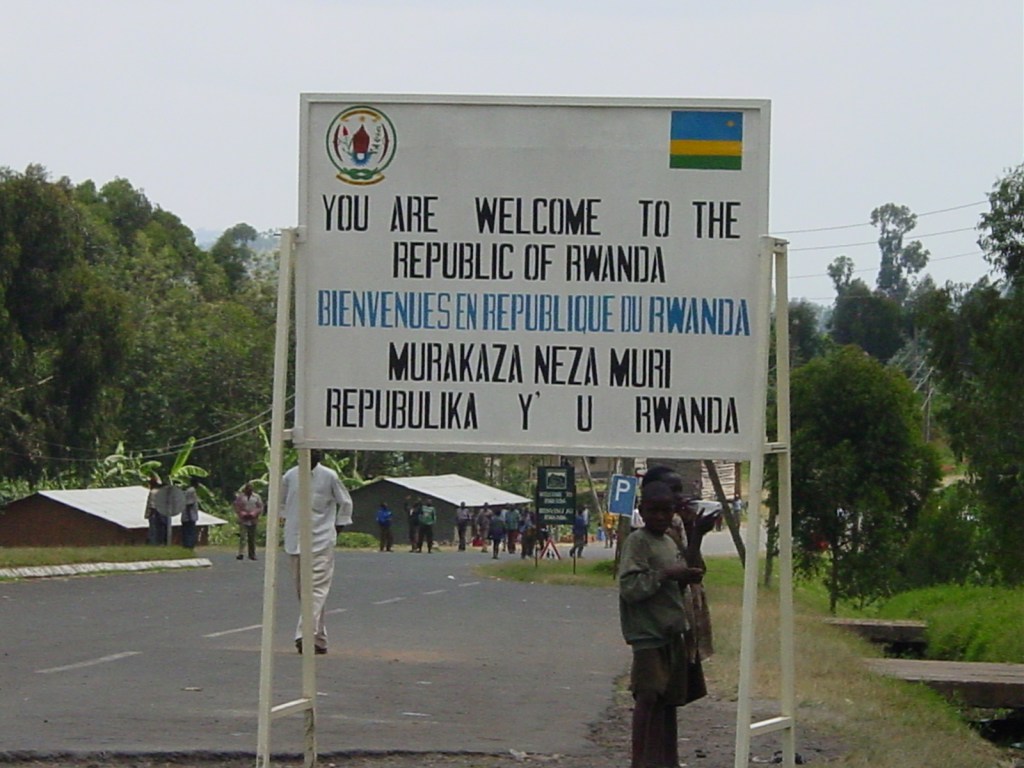
Welcome to Rwanda! by Laura is licensed under CC BY-NC-ND 2.0

Additionally, though not mentioned, one of the strengths of Anna’s approach in Russia is that she herself is Russian and speaks the language. This is something that would also be necessary in the case of Rwanda, especially the need to speak the language. Though there are three official languages in the country, French, English and Kinyarwanda, French and English are spoken by only 0.1 and 0.2% of the country respectively (https://www.worldatlas.com/articles/what-languages-are-spoken-in-rwanda.html). They are languages for the elite while Kinyarwanda is spoken by about 93% of the population making it the most widely spoken language in the nation (https://www.worldatlas.com/articles/what-languages-are-spoken-in-rwanda.html). Thus, not only would an interviewer need to engage on a more close and personal level, but they would need to speak Kinyarwanda if they truly wanted to speak with a broader cross-section of Rwandan society, not just the elite who speak other languages.

Works Cited:

Categories
Uncategorized

The Stranglehold of the Rwandan Patriotic Front

Flag of the Rwandan Patriotic Front. Source: By GabrielGGD – Own work, CC0, https://commons.wikimedia.org/w/index.php?curid=48964878

Andreas Schedler in his work “The Logic of Electoral Authoritarianism” outlines the presence of a new type of authoritarianism. Unlike previous iterations, the traditional communist and fascist states with complete control over all aspects of their country and information, these new authoritarian nations choose to use elements of democracy as a ways of legitimation and control. A common way to do this, as Schedler discusses, is through the ideal of Electoral Authoritarianism, referred to in other works as dominant party rule. Essentially it means that while there are elections that are held and opposition parties are able to run, yet there is not a real expectation that these opposition will win and manipulation tactics are used by the dominant party to ensure this (Schedler, 3 7-8).

It is clear that Rwanda is an example of dominant party rule. The Rwandan PatrioticFront has been in power since they contributed to the end of the Rwandan Genocide in 1994. Paul Kagame himself has been President of the nation since 2000, with a recent constitutional change allowing him to stay in power until at least 2034. This fact alone disqualifies Rwanda from being considered a fully functioning democracy, as it is not possible to have a democracy if there has never been any example of a successful transfer of power. This is because having one party dominant prevents neutral observers from understanding how said party might react to having its power taken away. But in the case of Rwanda, the Rwandan Patriotic Front goes even farther in its attempts to suppress opposition even while claiming to be democratic.

In reports by Human Rights Watch, Amnesty International, and Freedom House, it is openly acknowledged that President Kagame actively suppresses all criticism in Rwanda, especially those who run against him. Elections are marred by disappearances of family members, killings, and arbitrary detention. Leaders of opposition parties who actually gain traction often end up arrested for crimes such as “disruption of the peace” or undermining the government. Fear and coercion are effective tools, keeping people scared of truly opposing the government in case they are the next victim to disappear or be found dead. Furthermore, not only are opponents and civil society regularly silenced in the run up to elections, but the 2017 elections also showed signed of irregularities, with the US and European Union questioning the vote (https://www.hrw.org/news/2017/08/18/rwanda-politically-closed-elections).

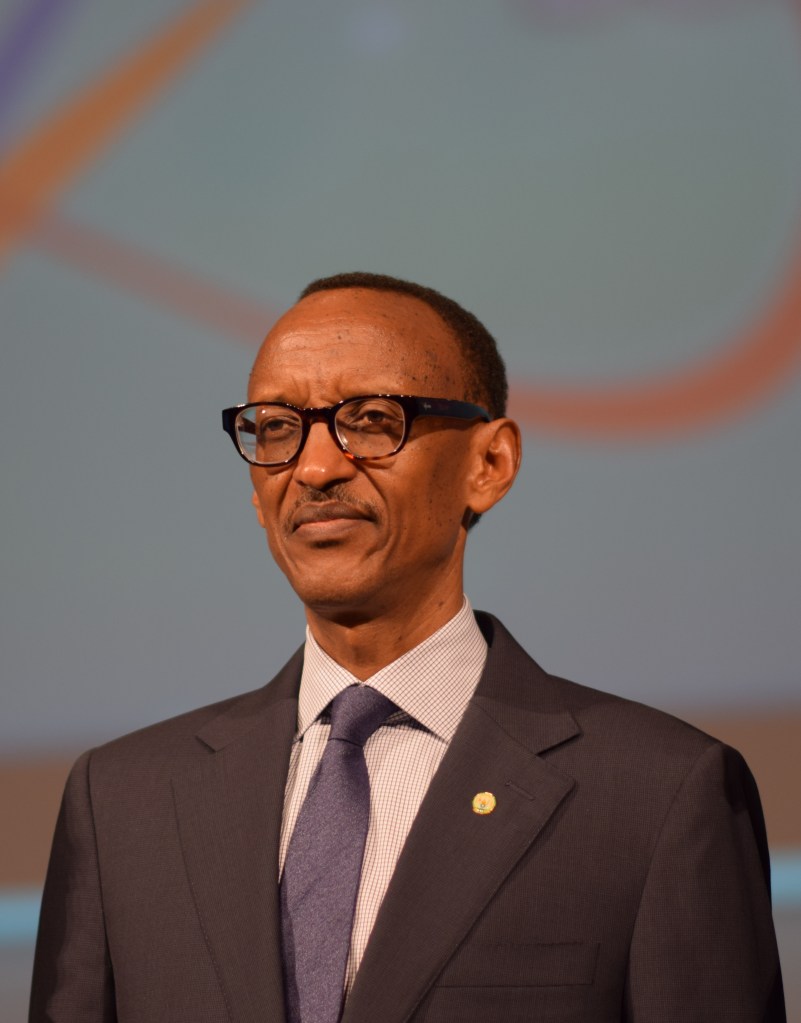
Rwanda President Paul Kagame by Veni is licensed under CC BY-NC 2.0

Rwanda shows all signs of the dominant party rule, and has since 1994. The dominant party in question, the Rwandan Patriotic Front has maintained its hold with no real opposition for decades, even while claiming democratic rule. Though there is voting and opponents are allowed to run, the elections cannot truly be considered fair and free as would be expected in a democracy due to active and violent suppression of opposition as well as voting irregularities which ensured that Paul Kagame remains in power, often receiving extremely high numbers, in 2018 winning with 99% of the vote (https://www.hrw.org/news/2017/08/18/rwanda-politically-closed-elections). The façade of democracy in the country is thinning and more and more are starting to call Rwanda an authoritarian state despite it’s leaders popularity on the international stage. However, much will need to change before Rwanda is able to successfully move from a dominant party state to a true democracy.

Works Cited:

Categories
Uncategorized

Amahoro: President Kagame’s Peace Propaganda

A recent promotion video of the Rwandan Defense Force, found on the Government Twitter Account.

As in many countries, propaganda is used by the Rwandan Government in many forms. The above video is one example showing a ceremony for the commissioning of new cadets into the RDF and Paul Kagame’s speech. The video itself is an effective tool of propaganda for a few reasons. First, for the government in general it is a show of strength in a time when Kagame has been increasingly targeted by international critics of his regime and with a small increase in dissent in Rwanda itself (https://www.dw.com/en/kagames-third-term-bid-draws-international-criticism/a-18900414). The RDF for Rwanda is a symbol of strength and it is closely linked to the government as a whole and Kagame himself (https://www.tandfonline.com/doi/abs/10.1080/17531055.2018.1418168?forwardService=showFullText&tokenAccess=tRsSJrk2G7jiqwRrckPu&tokenDomain=eprints&doi=10.1080%2F17531055.2018.1418168&doi=10.1080%2F17531055.2018.1418168&journalCode=rjea20). The military pomp of the video, the cadets in full regalia marching in unison highlight his power, showing if nothing he has this support and it is not insignificant.

Since his ascent to power, Kagame has often put forth an image of military strength, showing himself as a hero of the Rwandan Genocide, the man who helped to end the terror. He has always connected himself heavily to the Rwandan Defence Forces, the name of the Rwandan Army but also an offshoot of his own Political party, the Rwandan Patriotic Front, who helped end the genocide in 1994 (http://www.incore.ulst.ac.uk/services/cds/agreements/pdf/rwan1.pdf).

Rwanda Defence Force deploys to Central African Republic – Kigali,16 January 2014 by Rwanda Government is licensed by CC BY-ND 2.0

Additionally, it’s a reminder of the RDF’s, and Kagame’s, role in Rwanda’s peace. Multiple times, Kagame mentions the history of the RDF, solidifying in the eyes of the target audience their importance in the end of the Rwandan Genocide. He credits them with the continued peace in the nation, reminding the citizens to whom they should be grateful.

Finally, Kagame solidifies his and his party’s importance to Rwanda, by highlighting the RDF’s ties to the citizens. He emphasises the RDF’s role in bringing the country to “where it is today” and its role in furthering Rwanda’s development. The subtext is clear, without the RDF, without Kagame, Rwanda will never have made it this far, nor would it continue to develop successfully. His power is clear, but so is his benevolence. He is not just a powerful figure in the country, but a necessary one as is clear in the video.

However, in at least one arena, this propaganda as a tool is less effective. Putting the tweet on twitter means that though it has a potentially more widespread audience internationally (a fact helped by the subtitles in English), it could also limit viewing domestically. It will only be seen by those who have twitter accounts, which removes older populations and those in rural areas who may have less access to wifi. Furthermore, the nature of twitter itself means that it probably will not be seen du to overwhelming amount of content on the website every day. This is further confirmed by the interactions with the tweet, it was retweeted a total of 133 times with 486 likes. Though not insignificant and more than many of the other tweets on the account usually received, it still suggests a lower audience than desirable.

Works Cited:

Design a site like this with WordPress.com
Get started